
Key takeaways:
- Finishing a basement typically costs about $7 – $23 per square foot for a partially finished space and $30 – $100 per square foot for a completely unfinished one, ranging from roughly $15,000 – $75,000 overall.
- Factors such as plumbing, electrical needs, finish quality, permits, and contractor rates can significantly influence total project costs.
- A finished basement can deliver strong benefits, including up to a 71% return on investment, increased living space, and greater appeal to future buyers.
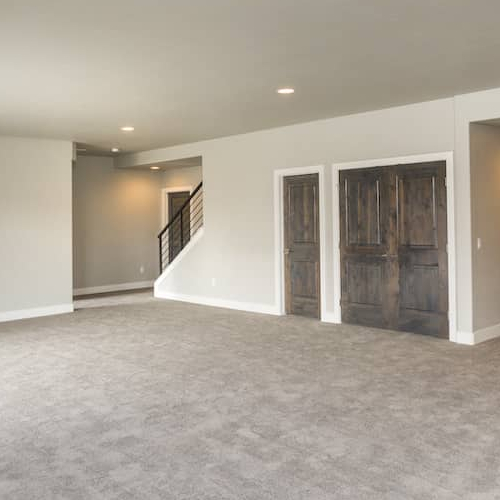
Need extra living space? Converting a basement from unfinished to finished could be the perfect solution. Consider that, per the National Association of REALTORS®’ (NAR) Remodeling Impact report, finished basements (basement conversion to a living room) are among the top home improvement projects for return on investment (71%). This undertaking expands livable space in the home, transforming it into a work-from-home area, living room, home theater, wet bar, or even an additional bedroom with an adjoining living area and bathroom. It also improves happiness, as evidenced by this project garnering an 8.8 out of 10 “Joy Score” (which indicates happiness homeowners reported with the renovation), according to the NAR report.
It’s smart to learn more about the price tag of finishing a basement – from flooring to furnishings. But how much does it cost to finish a basement? Read on to learn more about the average cost to finish a basement, how you can lower these expenses, and whether basement finishing is worth the investment.
What’s the average cost to finish a basement?
Angi reports that the price to finish a basement ranges from $15,000 to $75,000, with many homeowners paying roughly $32,000. Angi further reveals that the typical price to finish a basement spans from $30 to $100 per square foot for an initially completely unfinished basement versus $7 to $23 per square foot for an initially half-finished basement.
“Costs can vary dramatically based on regional price differences and the quality of the materials and products used. But in my experience, a full basement finish of around 1,050 square feet, with one to three bedrooms, one bath, and other living areas, could range between $61,000 and $116,000,” says Justin Jackman, product director for Verisk Analytics, a leading provider of data to the insurance industry, contractors, and home repair/remodeling professionals. “These costs include framing, rough-ins, and finish work, but do not include adding a furnace or AC compressor.”
There are several factors that determine the final price tag of your basement improvement project. Let’s take a look at how these elements will affect your bottom line.
- The size (square footage) of the space. How much room do you have available to make changes to your basement?
- The extent of the renovation. For instance, finishing a basement to include a bedroom and bathroom requires a plumber to rough in pipes and hook into the central plumbing of the home. You’ll also want to hire an electrician for wiring throughout the space.
- The quality of the finishings. You may prefer high-end or luxury details when it comes to fixtures and flooring. Additionally, personalized touches like intricate crown molding can increase the price.
- Building permits. Keep in mind that any contractors you hire will need to secure building permits, as outlined by your municipality’s code requirements. Every permit involves a fee, adding to the cost of your project.
- Contractor rates. Ideally, you should request bids from several different contractors when price is an issue. Different contractors will charge various rates, and labor costs can lead to soaring project expenses. Consider doing some of the work yourself if you have the skills and experience.
- Unexpected outcomes (or disasters). Home improvement projects sometimes include unwanted surprises – and higher costs as a result. Older residences could hide damage or environmental issues like asbestos or lead paint. Your contractors could discover that the home was wired incorrectly, necessitating them to update all electrical wiring to adhere to current code, thereby increasing the price. Brace yourself for unexpected issues when pursuing a major renovation like finishing a basement.
How can I lower the cost to finish a basement?
While you don’t want to skimp on materials or labor quality, you also don’t want your basement finishing project costs to escalate beyond what you can afford. Here are several strategies to help keep your basement renovation expenses on budget.
Keep the design simple
With so many design and furnishing options, it can be tempting to order custom finishes to make your basement feel unique. But if you’re trying to conserve costs, it makes better sense to stick with standard hardware and finishes. The same goes for flooring, windows, and decor choices. Prioritize the basement areas you’re willing to splurge on, and then compromise on other aspects that are less important to the function of the space. For example, if you’re set on having a home theater, consider choosing a less expensive flooring style to reserve funds for the cost of installing the entertainment system.
When it comes to flooring, you don’t have to pick the most luxurious carpet; a building-grade berber could be perfectly acceptable for a play area or entertainment space for teenagers. At bare minimum, aim to cover the basement concrete floor with some material, whether that be carpeting, tile, wood, laminate, or vinyl.
Zev Freidus, president of ZFC Real Estate, offers several other suggestions for trimming costs.
“Consider choosing an open layout to reduce framing and drywall, avoid moving plumbing stacks or load-bearing walls, and keep bathrooms near existing lines,” he says. “Use stock cabinet sizes, ready-to-assemble storage, and standard door widths to eliminate custom carpentry expenses. Opt for budget-friendly finishes like luxury vinyl plank over hardwood, choose LED canless lights instead of traditional recessed cans, and use a basic painted drywall or a drop ceiling instead of building elaborate soffits.”
The bottom line is that, when every dollar matters, it’s best to choose a simple design for your basement. This may involve skipping a bedroom or bathroom addition and instead focusing on creating an expansive living room space or work-from-home. Or, if you are determined to create a home theater down there, perhaps choose more affordable flooring and window coverings so that you can splurge on electrical upgrades. The key is to stay disciplined and on budget.
Leave some unfinished space for storage
Remember: The size of your basement and the amount of square footage will dictate your remodeling costs. If you are intent on trimming your budget, consider only finishing part of the basement, and then leaving the unfinished space to be used for storage. This way, instead of renovating your whole basement, you’ll only have to pay to revamp a certain percentage of its square footage. Plus, it leaves you with plenty of room to store seasonal items and furniture.
“Unfinished sections for storage allow savings on flooring, drywall, and fixtures – while still offering practical utility and flexibility for future upgrades,” adds Jackman.
DIY when possible
Determined to do it yourself? If you have the know-how, tools, and confidence, you can save a lot of money by tackling this as a DIY project.
“Taking on demolition, painting, or simple tasks yourself can save about 20% on costs,” Jackman says.
Examples of jobs you can handle solo include painting the walls and ceiling, putting in insulation, and adding window coverings and decor. But don’t try to take on more than you can feasibly handle and don’t start jobs you don’t have the skills to complete effectively. Winging it could lead to larger expenses down the road if you need to hire professionals to repair inferior work, or even potential damage that’s not code-compliant.
Different parts of a basement finish are ideal for DIY, and other aspects are best left to the pros. Here’s a handy guide to help you decide.
|
Project |
DIY |
Hire a pro |
|
Electrical wiring |
x |
|
|
Flooring installation |
x | |
|
Plumbing updates |
x | |
|
Decorating/interior design |
x |
|
|
Painting |
x |
|
|
Drywall installation |
x | |
|
Fixture installation (faucets, showers, etc.) |
x |
Let's break down each of these jobs to help you better decide if the task is ideal for DIY or a professional:
Electrical wiring. Only a trained electrician should install or rewire electrical wiring. One incorrectly positioned wire could lead to injury, fire, or death. Don’t take a chance: Enlist an expert here. “Basements require correct load calculations, GFCI and AFCI electrical protection, proper grounding, and permits with inspections. A licensed electrician will keep the work compliant so that insurance and property resale are not jeopardized,” Freidus says.
Flooring installation. If you have the skills, you can probably install carpet, vinyl, or other flooring yourself. But incorrect installation can lead to serious regret and costly repair/installation expenses. That’s why it’s probably best to trust the pros on this one. “Subfloor preparation and accurate cuts and leveling can be challenging. Poor work leads to damage or uneven flooring,” says Jackman.
Plumbing updates. As with electrical wiring, plumbing commonly requires permits. What’s more, poorly installed plumbing can lead to leaks and water damage. This is another area where it pays to recruit a pro.
Decorating/interior design. If you have an eye for design and a flair for decorating, this is one DIY task you can check off your list. Just be sure to select window coverings, art, and furnishings that fit your budget.
Painting. Another job you can handle alone is painting walls and ceilings. Explore different swatches and test them on a small inconspicuous space on the wall to determine whether the color is the best for that area.
Drywall installation. Unless you have sufficient experience hanging and finishing drywall, this is a job only trained professionals should handle. “Proper taping, mudding, and finishing ensure durability and a seamless appearance,” Jackman says.
Fixture installation. Connecting plumbing or electrical fixtures is another chore ideally suited for experienced contractors.
Is finishing the basement worth the investment?
Now that you have a better idea of the different costs and work involved with finishing your basement, it’s natural to ask yourself: Is it even worth it? The experts say “yes.”
“Finishing your basement is absolutely worth the time and investment, in my experience as a real estate agent,” says Michele Lawrie, a real estate consultant with HomeAbroad. “It adds usable living space, whether for a family room or guest suite, and makes your home more appealing to buyers when you sell.”
Freidus agrees.
“It can be worth the effort and cost, particularly if you control scope and finish quality. Just be aware that below-grade space is typically valued less than above-grade additions and improvements,” he says.
Note that finishing a basement offers a high return on investment (ROI). In fact, completing this project yields a 71% ROI, per the National Association of REALTORS®. That means, when it's time to list your home for sale, it could fetch a higher price and you could recoup a significant portion of the dollars you spent. Many home shoppers prioritize a finished basement as a must-have on their next home wish list. But even if you don't plan on moving anytime soon, this home improvement will expand your living space and provide more enjoyment and flexibility for current and future needs.
Eager to pursue a basement renovation project? Take the time to better understand your budget and how you plan to finance this expensive endeavor.
How to finance a basement renovation
There are several different options for funding a basement remodel job. Here are four of the most popular choices.
Home equity line of credit (HELOC)
A HELOC uses the equity in your home to finance the renovation. This loan provides you with a line of credit that you can use only if and when you need it. The downside is that defaulting on a HELOC could lead to foreclosure. “A HELOC offers revolving credit and flexibility for phased renovation work. But the rate is usually variable, so payments can rise over time,” Freidus says.
Note that Rocket LoansSM does not offer HELOCS at this time, but we are dedicated to helping you understand your options when it comes to financing your finished basement.
Home equity loan
This loan also taps your accrued equity in the home to pay for the basement renovation. But a home equity loan is paid in a lump sum, and it’s crucial to understand how much money is required for this project – as your equity could be insufficient to cover an extensive or high-end basement remodel. Because the loan is secured by the equity in your home, defaulting on this loan could also result in foreclosure. “Getting a lump sum at a fixed interest rate makes payments predictable and easier to budget for a set renovation plan,” says Lawrie.
Our sister company, Rocket Mortgage, offers a Home Equity Loan, which could be an option for funding your finished basement.
Credit cards
If you have a high credit limit on one or more of your credit cards, you could use them to pay for the renovation. “This option is convenient for relatively smaller expenses, with the potential to earn credit card rewards,” Lawrie says. However, be sure you fully understand the financial impact of this option, as credit cards carry much higher interest rates.
Personal loan
Thankfully, personal loans don’t require you to liquidate equity in your home. But you will need a higher credit score to qualify for one. “A personal loan has a fixed rate and term, but the rate may be higher than secured options, and loan sizes can be smaller,” says Freidus. Rocket Loans provides personal loans ranging from $2,000 to $75,000 to qualified borrowers.
The bottom line: Budget for the cost to finish the basement
Renovating a basement can yield exciting possibilities for you and your family. But you’ll want to estimate the costs involved carefully, as these expenses can vary widely, depending on different factors like the square footage, quality of the finishings, scope of the renovation, contractor rates, building permits, and unanticipated surprises. Set a realistic budget with extra wiggle room for cost overruns and wildcards. Then, begin contacting and vetting reputable contractors and home improvement professionals who can help you get to the finish line.
Need help financing your basement remodel, but don't necessarily want to tap into your home equity? Check out personal loan options available from Rocket Loans.

Erik J Martin
Erik J. Martin is a Chicagoland-based freelance writer whose articles have been published by US News & World Report, Bankrate, Forbes Advisor, The Motley Fool, AARP The Magazine, USAA, Chicago Tribune, Reader's Digest, and other publications. He writes regularly about personal finance, loans, insurance, home improvement, technology, health care, and entertainment for a variety of clients. His career as a professional writer, editor and blogger spans over 32 years, during which time he's crafted thousands of stories. Erik also hosts a podcast (Cineversary.com) and publishes several blogs, including martinspiration.com and cineversegroup.com.
Related Resources

5-minute read
Mortgage vs. loan: Which one do you need?
A personal loan can be used for almost anything, while a mortgage is used primarily to buy a home. Discover other key differences between a mor...
Read more
4-minute read
How Much Does It Cost To Build A Deck?
Dreaming of spending as much time as possible outdoors this summer? It might be worth adding a deck. Find out the costs to build a deck based on your needs.<...
Read more

7-minute read
What is simple interest and how is it calculated?
Simple interest determines how much you’ll pay on a loan over time. Learn how it works, how to calculate it, and why it matters for your finances.
Read more