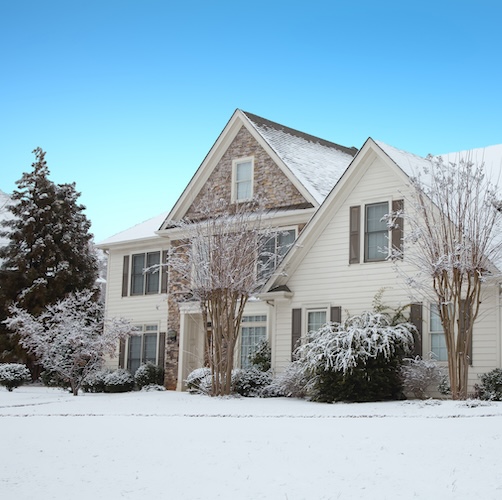

Now that we’re well into winter, you may want to budget for increased energy costs or, better yet, consider ways to lower them. According to ABC News, the average electricity bill is expected to increase about 4% this winter (from November 2025 to March 2026), accounting for an average rise in cost over the entire season to about $1,130 nationally.
Read on to learn tips and tricks to lower your energy use and your monthly utility costs.
Thermostat energy savings for winter
The simplest way to lower your energy use in the home is to be mindful of your thermostat settings. Bumping the temperature down even a few degrees can help rein in energy waste and improve your monthly utility costs.
ENERGY STAR recommends using programmable settings to adjust temperatures at different times of the day. For example, a wintertime temperature setting of 68 – 72 degrees may be preferable while you’re at home relaxing, but cooler temperatures may be set for when you’re at work. Of course, temperature settings ultimately depend on your preferences.
When used properly, a programmable thermostat can save you about $180 on heating and cooling costs over the year.
Seal drafts with weatherstripping
Small gaps in doors and windows can allow cold air to enter your home and warm air to escape. Such drafts put pressure on your home’s HVAC system, driving up energy costs and leading to inefficiencies.
To avoid this, check all your windows and exterior doors for leaks. Assess each area for visible gaps by feeling for where cool air is entering the home. Then close the gaps with weatherstripping, which creates an airtight seal that insulates the home. You can have a contractor do this task or do it yourself (DIY).
According to Homeguide, the cost of hiring a professional to install weatherstripping over the entire home ranges from $130 – $470, while DIY costs (materials only) range from $0.16 – $4 per linear foot. However, this can be a worthwhile investment. This Old House reports that installing weatherstripping can reduce your heating and cooling costs by as much as 20%.
Enhance home insulation
Your home’s insulation helps control heat, keeping warm air inside in the winter and locking out heat in the summer. However, different insulation materials offer different levels of protection measured in “R-Value.” Since climates vary, each region of the U.S. has a unique R-value recommendation that tells you what level of insulation you need for where you live. You can find a U.S. map denoting the R-value for each region on ENERGY STAR’s website.
In addition, consider conducting an energy audit to understand if your insulation is protecting your home sufficiently. For example, if you notice that some rooms feel cooler in winter and warmer in summer, this could indicate inadequate insulation.
Here are some of your insulation material options by R-value:
|
Material type |
R-value (per inch) |
|
Cavity batt and roll |
R-2.9 – R-3.8 |
|
Spray foam |
R-3.5 – R-3.6 |
|
Blown-in cellulose |
R-3.2 – R-3.8 |
|
Foam board |
R-4.7 |
|
Reflective / radiant barrier |
R-3.0 – R-17.0 |
Financing new insulation
The average cost of new home installation ranges from $1,600 to $8,000. Since this is a considerable sum, you may want to finance the cost with a home improvement personal loan.
For example, Rocket Loans offers personal loans ranging from $2,000 to $45,000. These are unsecured loans, meaning you don’t have to put up collateral to back the loan. Instead, we (and other personal loan lenders) assess your creditworthiness, debt-to-income (DTI) ratio, and other factors to determine whether you qualify.
Common personal loan requirements include a credit score of at least 580 (Rocket Loans recommends 640 or higher) and a DTI ratio of no more than 36%.
Harness natural sunlight during daytime
Using overhead lighting and lamps also increases your home energy costs. Where possible, rely on natural light. This is a simple and effective way to decrease energy use and save money.
Use insulated curtains at night
Insulated or blackout curtains are thick and provide protection against cool air that may otherwise seep through windowpanes. They can also help improve energy efficiency in the summer by ensuring hot seasonal sun doesn’t overheat your home.
Consider buying some insulated curtains online or at a local home improvement store.
Adjust water heater temperature
An electric water heater can suck up lots of energy if the temperature is set too high. Ideally, you should set your water heater thermostat to 120º F for optimum energy savings (and to minimize the risk of scalding).
That said, water temperatures also protect against harmful bacteria like Legionella. If you have family members with an immune system vulnerability or any medical condition putting them at risk, you should set your water heater above 120º F to help protect them against this bacteria.
Adopt energy-smart laundry practices
A newer-model energy-efficient washer and dryer can help minimize your energy bill. However, those who have older washers and dryers or want to save even more on energy costs should follow these best practices:
- Wash clothes in cooler water temperatures when possible.
- Wash and dry clothing during off-peak electricity use times.
- Air-dry clothes when possible.
- Wash only full loads. Half-loads waste water and energy.
- Choose the appropriate water level.
- Remove clothes from the dryer promptly. Re-drying clothes to de-wrinkle them wastes energy.
Switch to LED lighting solutions
LED lightbulbs burn cooler and brighter than standard incandescent or fluorescent bulbs. As a result, they use about 75% less energy and can last up to 25 times longer, which can make swapping out your older lightbulbs for energy-efficient LEDs a smart choice.
Unplug and manage ‘vampire devices’
Vampire devices are those that drain energy unnecessarily and drive up your electricity costs. You can find them by conducting a DIY home energy audit. This involves assessing each room in your home for energy drains by checking every outlet to see which appliances, gadgets, and lights are plugged in and using energy. From there, you can unplug unnecessary items.
One often overlooked energy vampire is the microwave. It constantly uses electricity to display the time. However, if you don’t need this feature, it may be best to unplug the device. The same goes for devices left in active standby mode. For example, a PlayStation 5 eats more than $17 in electricity costs per year while on standby.
Consider energy-efficient appliances
Choosing energy-efficient appliances can also help you save money on electricity costs each month – without even having to think about it. Think energy-efficient fridges, HVAC systems, dishwashers, etc. These appliances operate using much less energy than their standard counterparts, without sacrificing functionality.
For an extensive list of available energy-efficient appliances, visit ENERGY STAR’s website and explore options that fit your budget.
Stay updated on energy-saving rebates
Energy-saving rebates can also help you save money while making your home more energy-efficient. Ask local utility providers to provide a list of energy-efficient rebates or enter your zip code into ENERGY STAR’s rebate finder tool.
The bottom line: Prepare for winter by making the home more energy-efficient
Lowering your winter energy costs doesn’t have to be complicated. By programming your thermostat strategically, weatherstripping gaps, upgrading to LED bulbs, managing vampire devices, and more, you can significantly reduce your monthly utility bills. Start by conducting a home energy assessment.
For larger upgrades like new insulation, energy-efficient appliances, or HVAC replacements, consider financing these investments with a personal loan from Rocket Loans. Apply today!
Rocket Loans is a trademark of Rocket Mortgage, LLC or its affiliates.

Christian Allred
Christian Allred is a freelance writer whose work focuses on homeownership and real estate investing. Besides Rocket Mortgage, he’s written for brands like PropStream, CRE Daily, Propmodo, PropertyOnion, AIM Group, Vista Point Advisors, and more.
Related Resources
4-minute read
Energy-Efficient Home Improvements That Can Help Lower Taxes In 2025
Learn how energy efficient home improvements can help you save during the next tax season with tax credits.
Read more
6-minute read
How to finance heating and air conditioning systems
A working HVAC can save you from the summer heat or winter cold, but at a high cost. Learn how to finance heating and air conditioning systems affordably.
Read more
6-minute read
Will Inflation Influence The Home Improvement Projects Completed This Year?
Of homeowners in 2023, 77% plan to complete one or more home improvement project this year. Which projects are homeowners planning ...
Read more